01
The shell
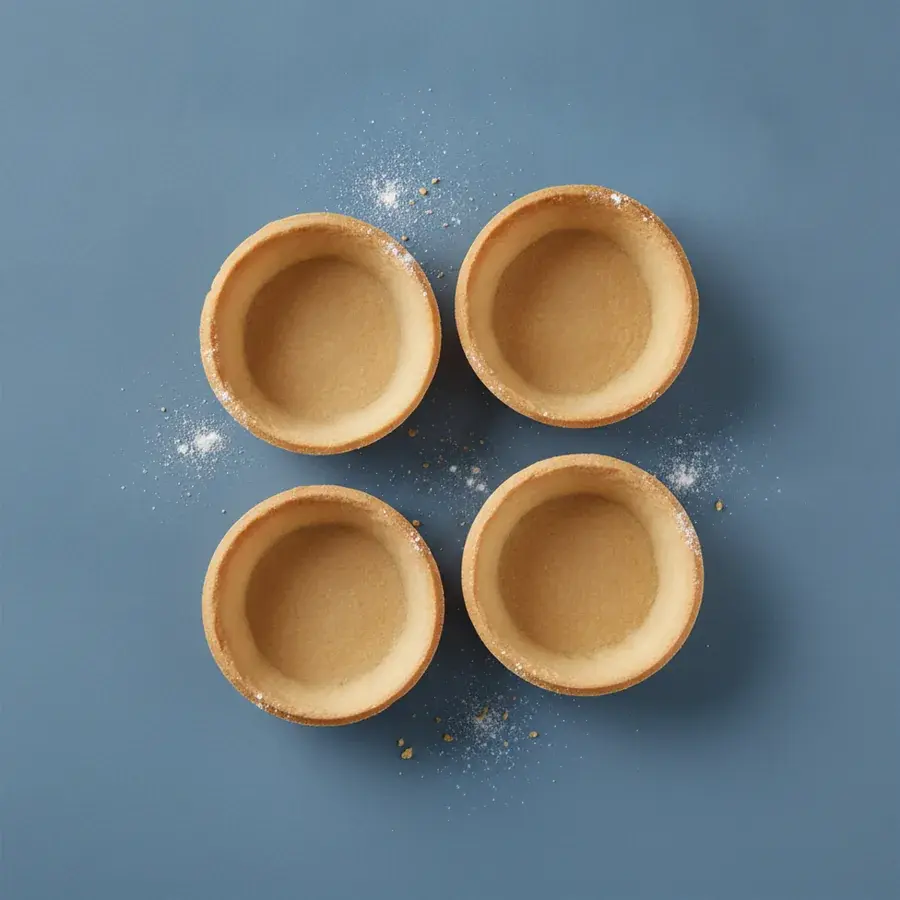
Sweet pastry, made from scratch, rested twice, and blind-baked until it is pale gold and genuinely crisp.
Everything starts with pâte sucrée — a sweet shortcrust of butter, flour, sugar and egg. It is mixed only until it comes together. Worked any further, the gluten develops and the baked shell turns tough instead of short, which is the single most common way a tart goes wrong before it has even been filled.
The dough then rests, and this is the stage that cannot be rushed. Resting lets the gluten relax and the butter firm up again. Skip it and the shell shrinks down the sides of the ring in the oven, leaving a shallow, wavy case that will not hold its filling level. That slump is why so many home-made tarts end up with a filling that pools to one side.
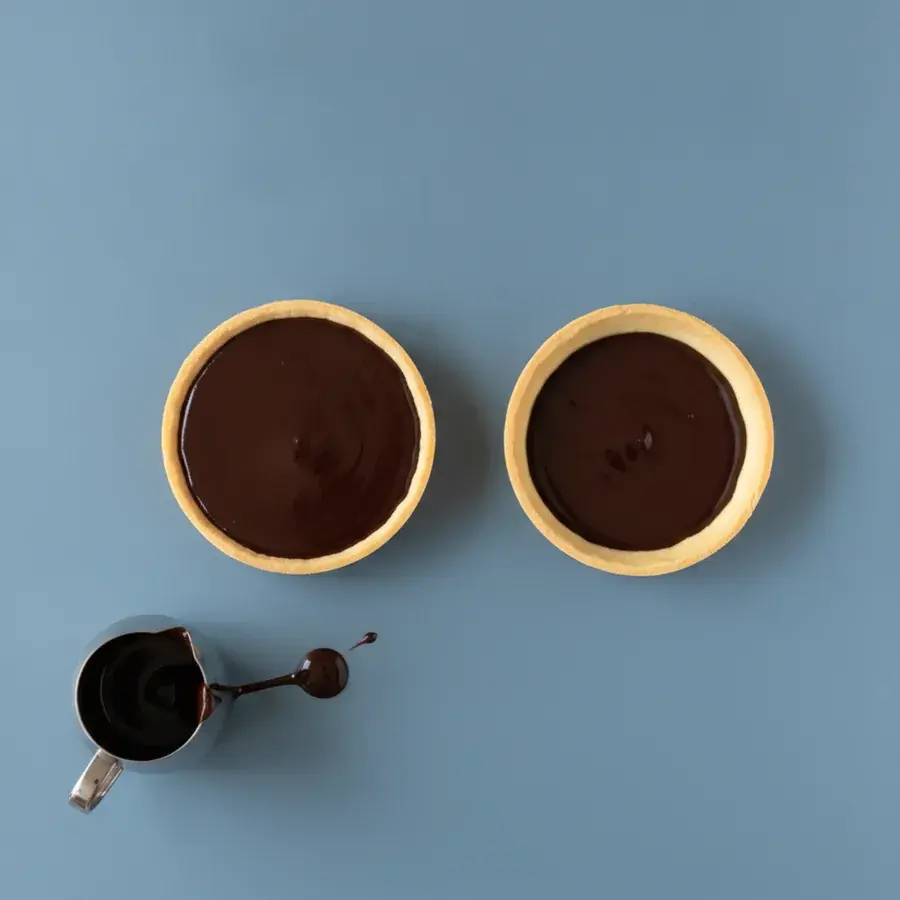
Each shell is rolled and pressed into its ring by hand, then blind-baked — lined and weighted so the base stays flat while the sides set. At roughly 2.75" across they are small, which makes them fiddly: a full-size tart shell is one job, and two dozen small ones is two dozen jobs.
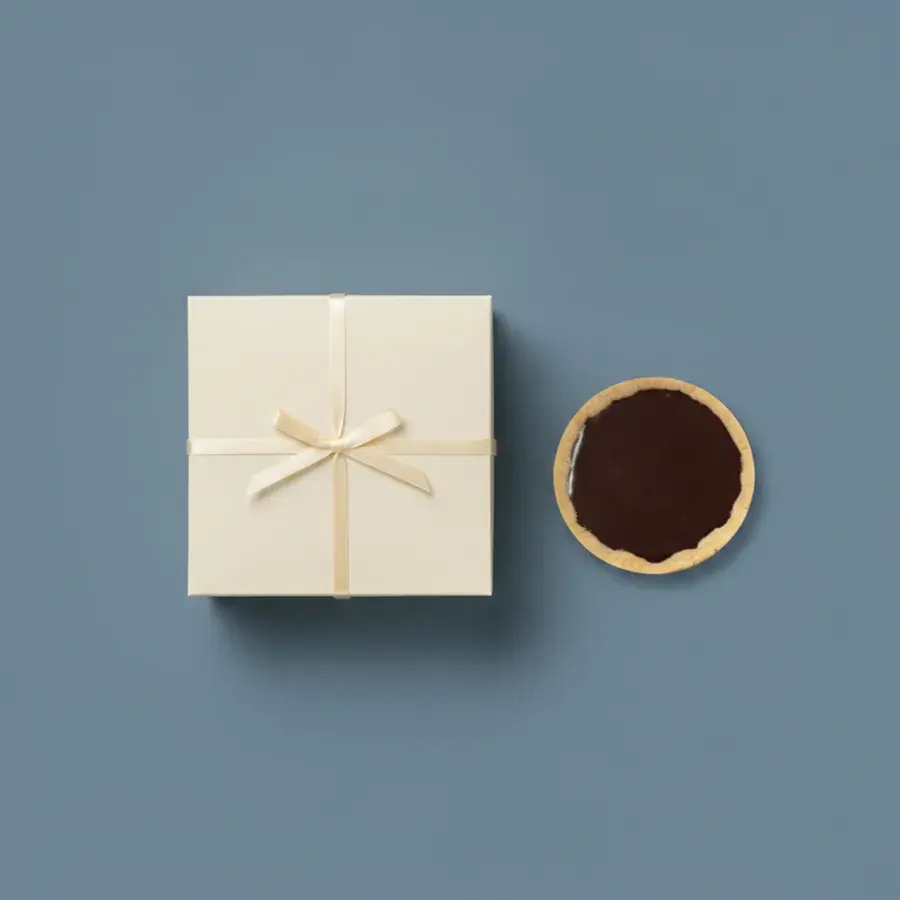
The rims come out slightly irregular from one to the next. That is what hand-forming looks like, and it is left alone deliberately. A machine-stamped shell is identical every time; these are not, and the difference is visible in the box.